

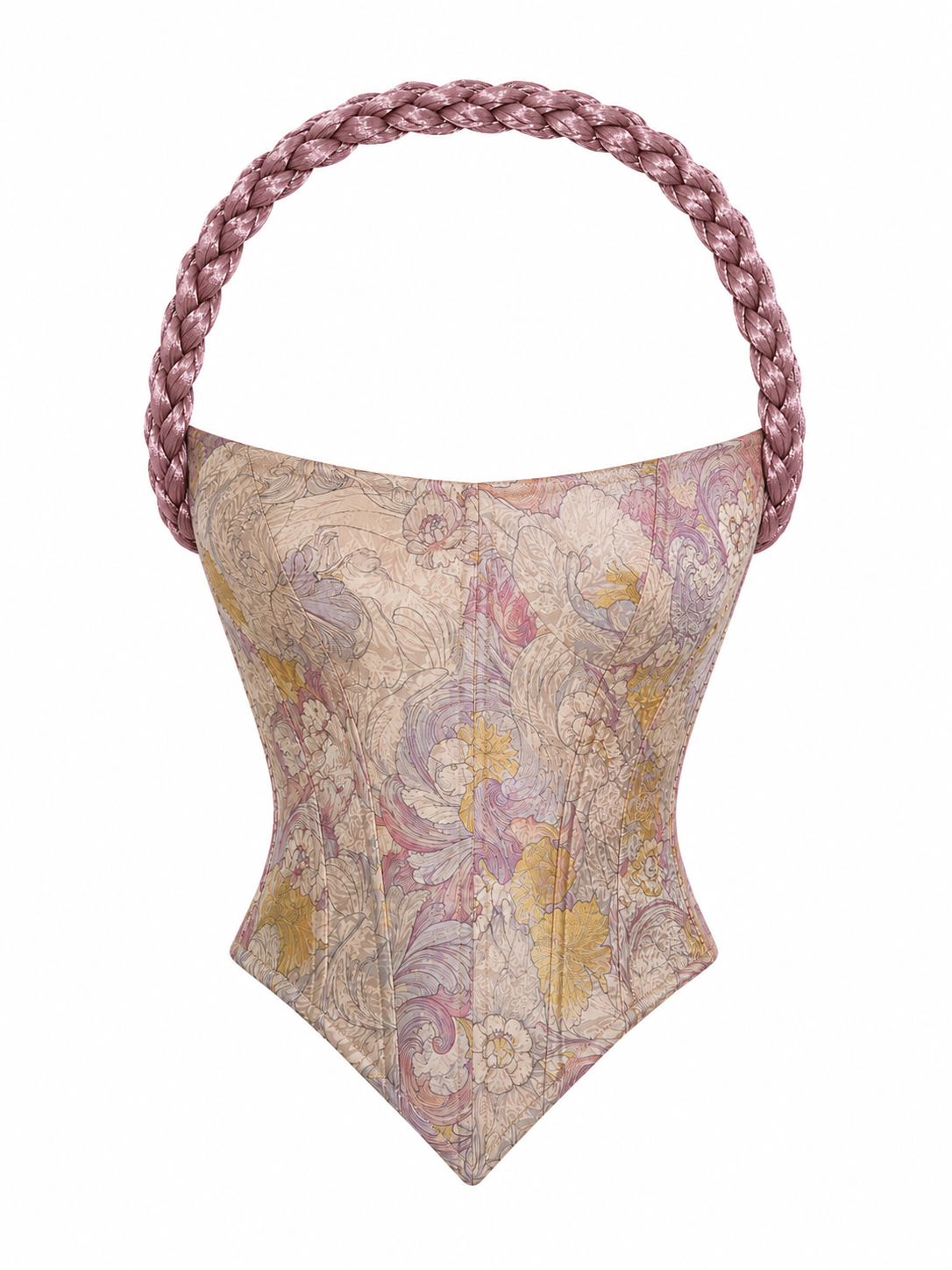
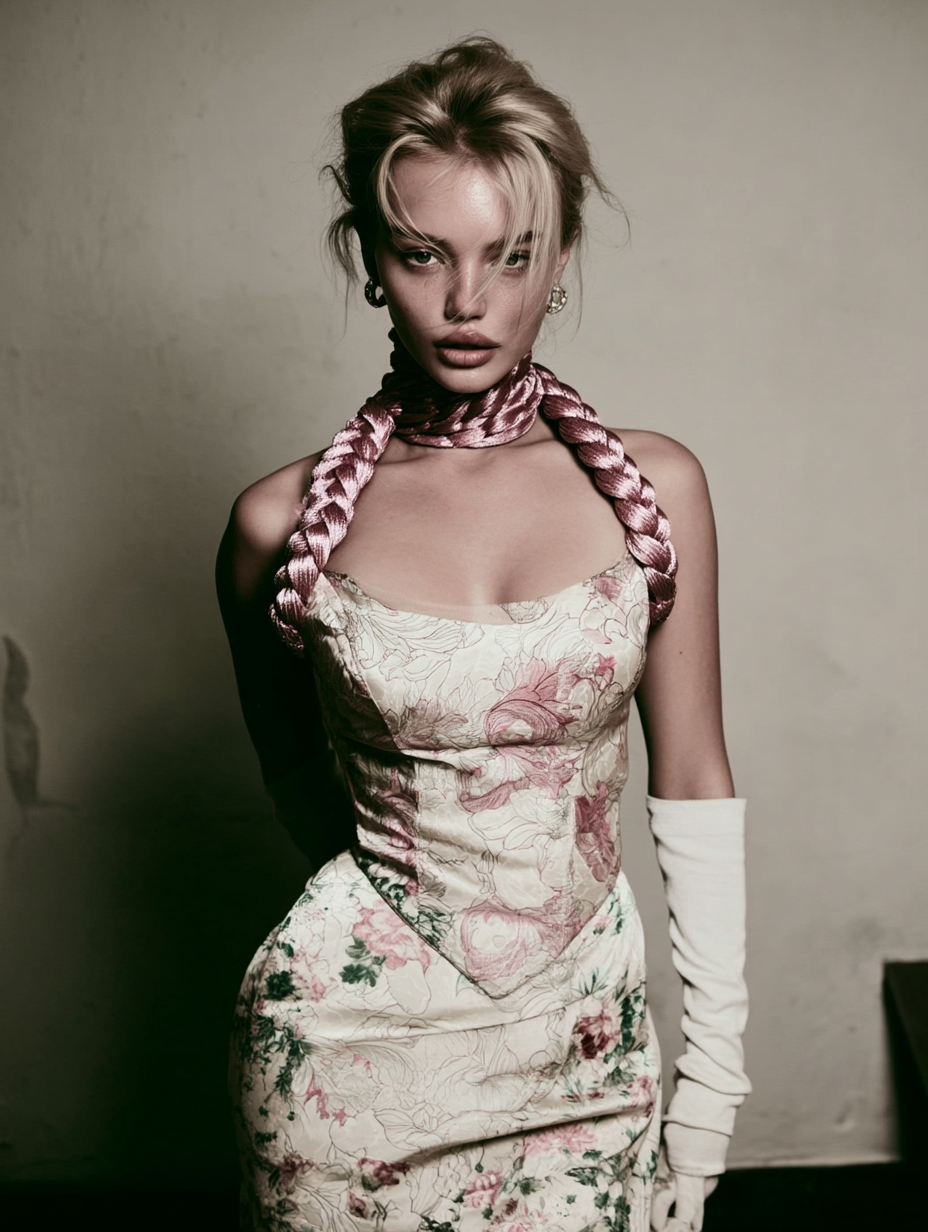
Corset FASCIA
THE OGIRIN
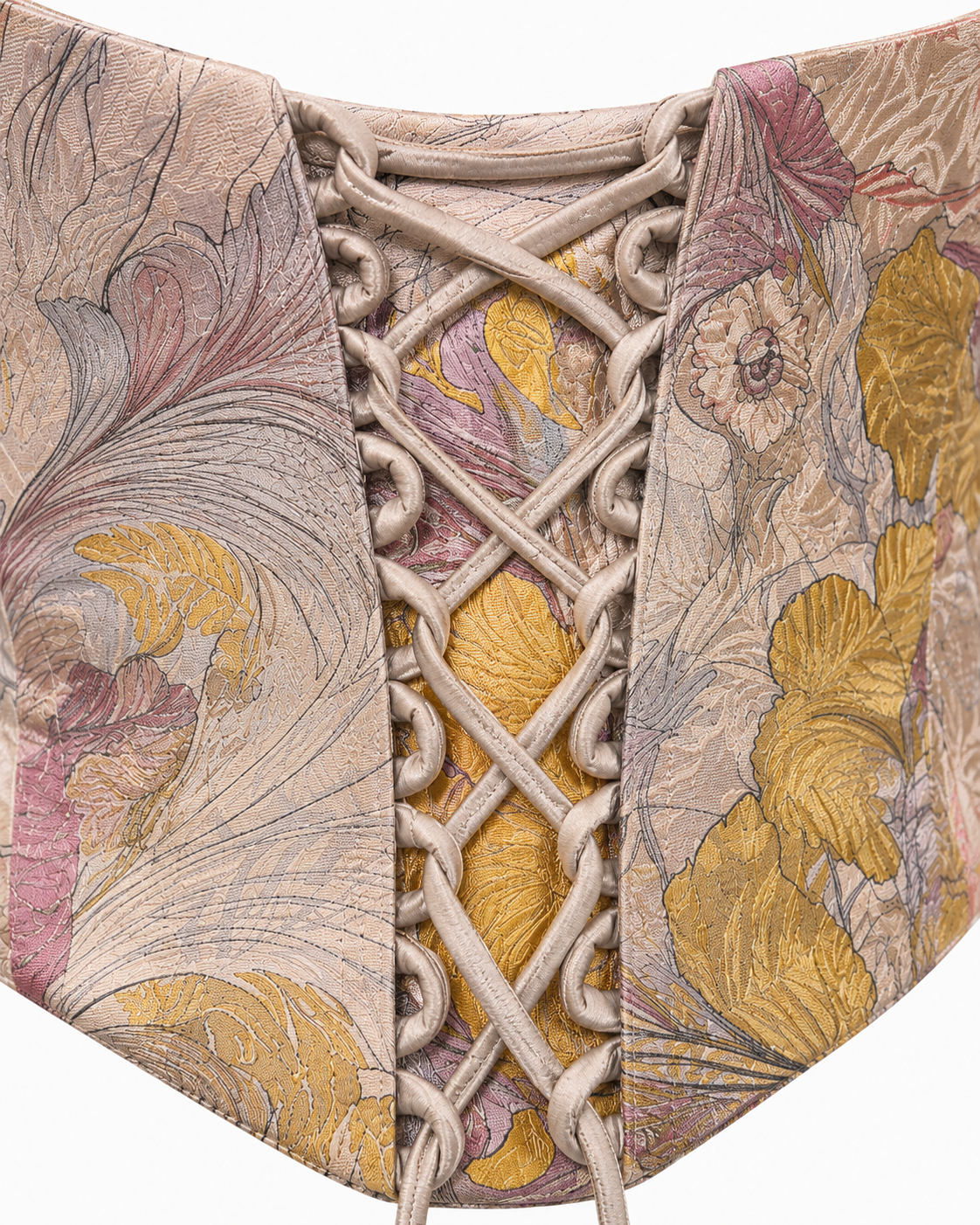
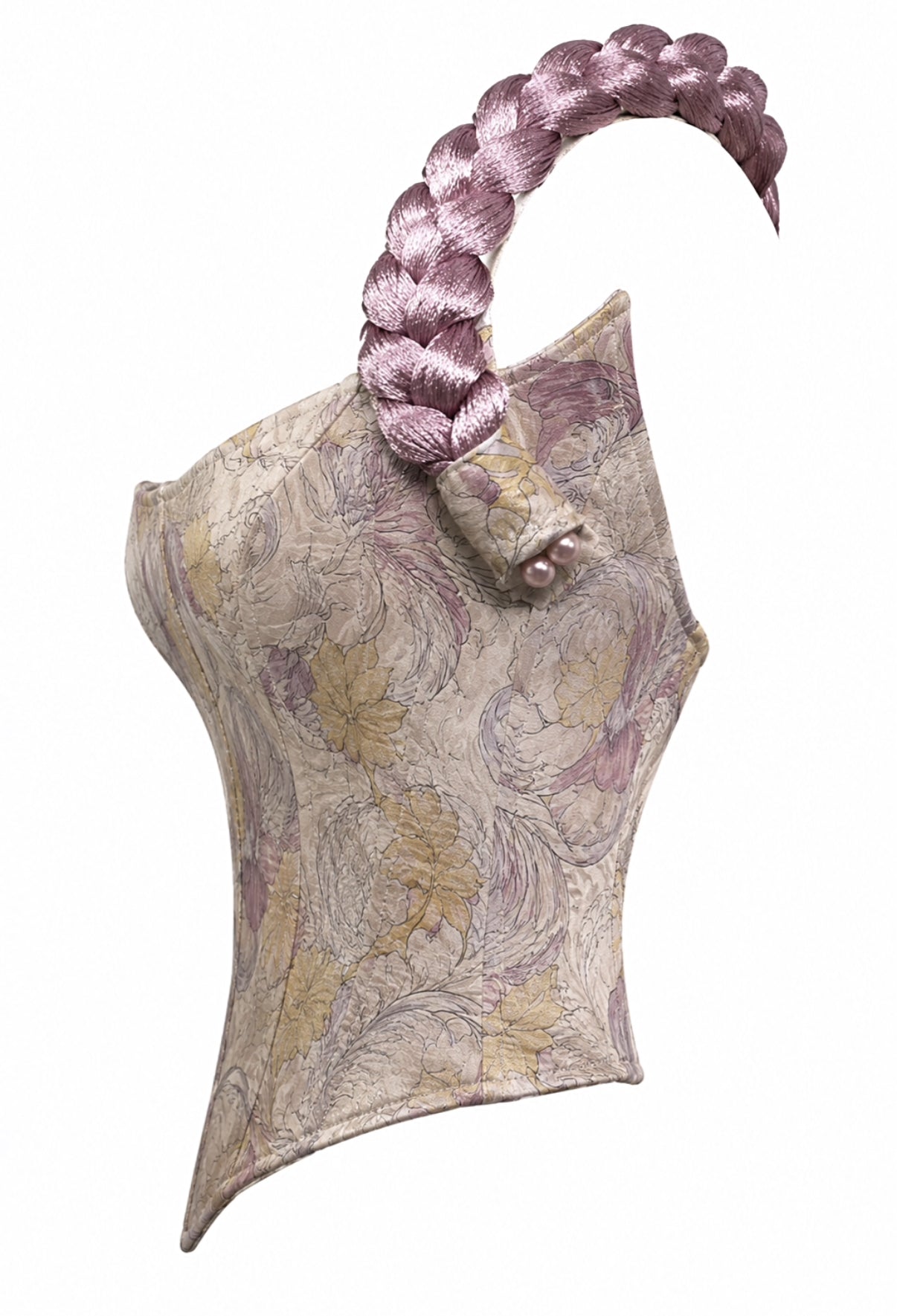
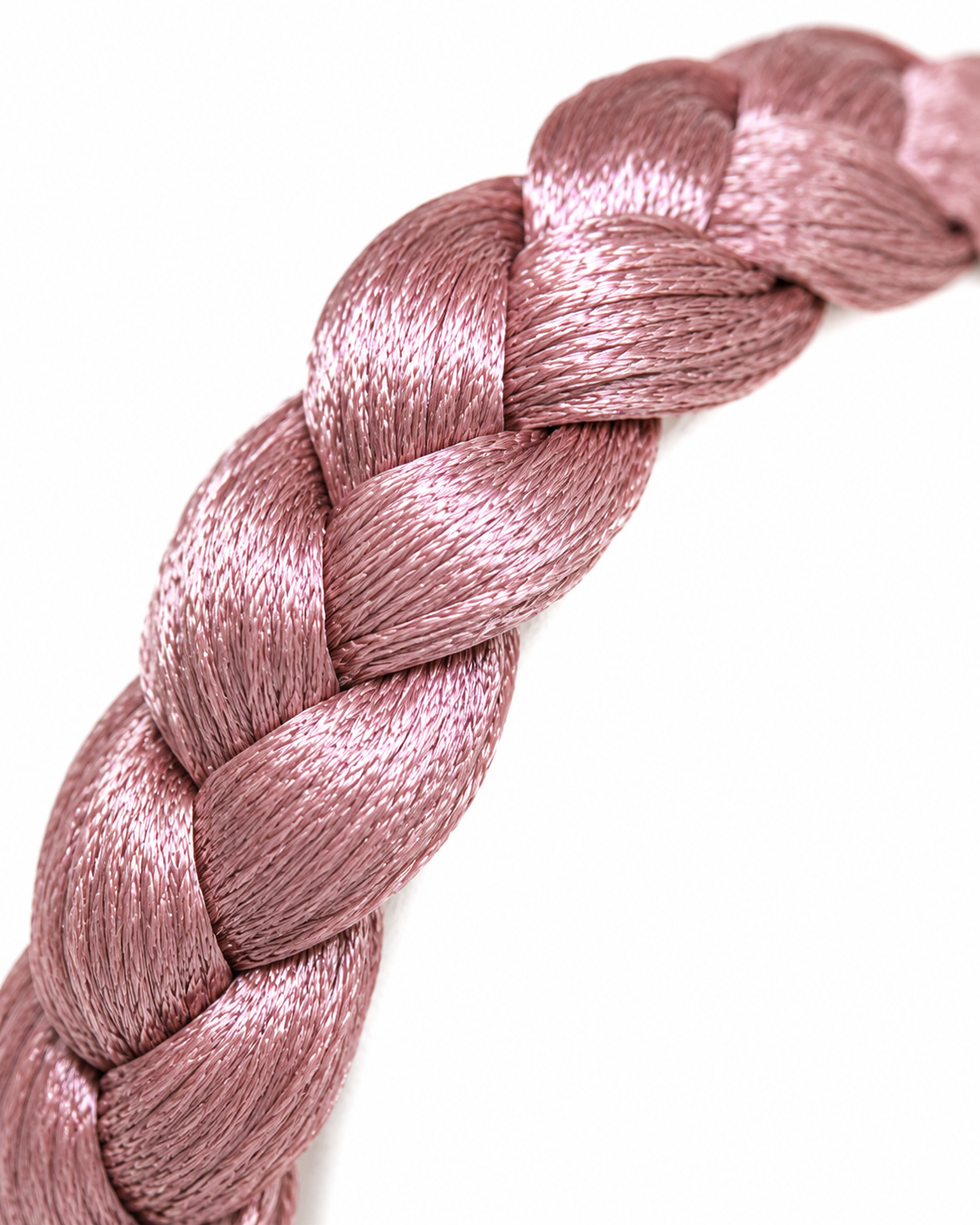
Michelangelo carved the Dying Slave for the tomb of Julius II and left him naked except for one thing: a narrow band across the chest. It covers nothing. It hides nothing. It is not drapery and it is not clothing. Look at the figure without it and you have a body. Look at it with the band and you have a body under tension — everything else in the marble suddenly reads as strain, as weight, as holding. One strip changes the entire sculpture. That is the oldest lesson in corsetry, and it was learned in stone long before it was learned in silk. FASCIA is built on that band. Silk, internal boning, lacing and across the throat a single hand-worked braid: the only visible element.
THE MOTIF
Michelangelo's Dying Slave, c. 1513–1516, Musée du Louvre
How to Measure
Bust
Wrap the tape around the fullest part of your chest, keeping it level across your back and parallel to the floor. The tape should be snug but not compressing—you should be able to slide two fingers underneath.
Natural Waist
Find the narrowest point of your torso—usually 2–3 cm above your navel. Bend gently to one side: the crease that forms is your natural waist. Wrap the tape around this point.
Hips
Stand with your feet together. Wrap the tape around the fullest part of your hips and seat—typically 18–23 cm below your natural waist. Keep the tape parallel to the floor.
Fabric & Care
Shipping & Returns
PAYMENT TERMS
Choose options