

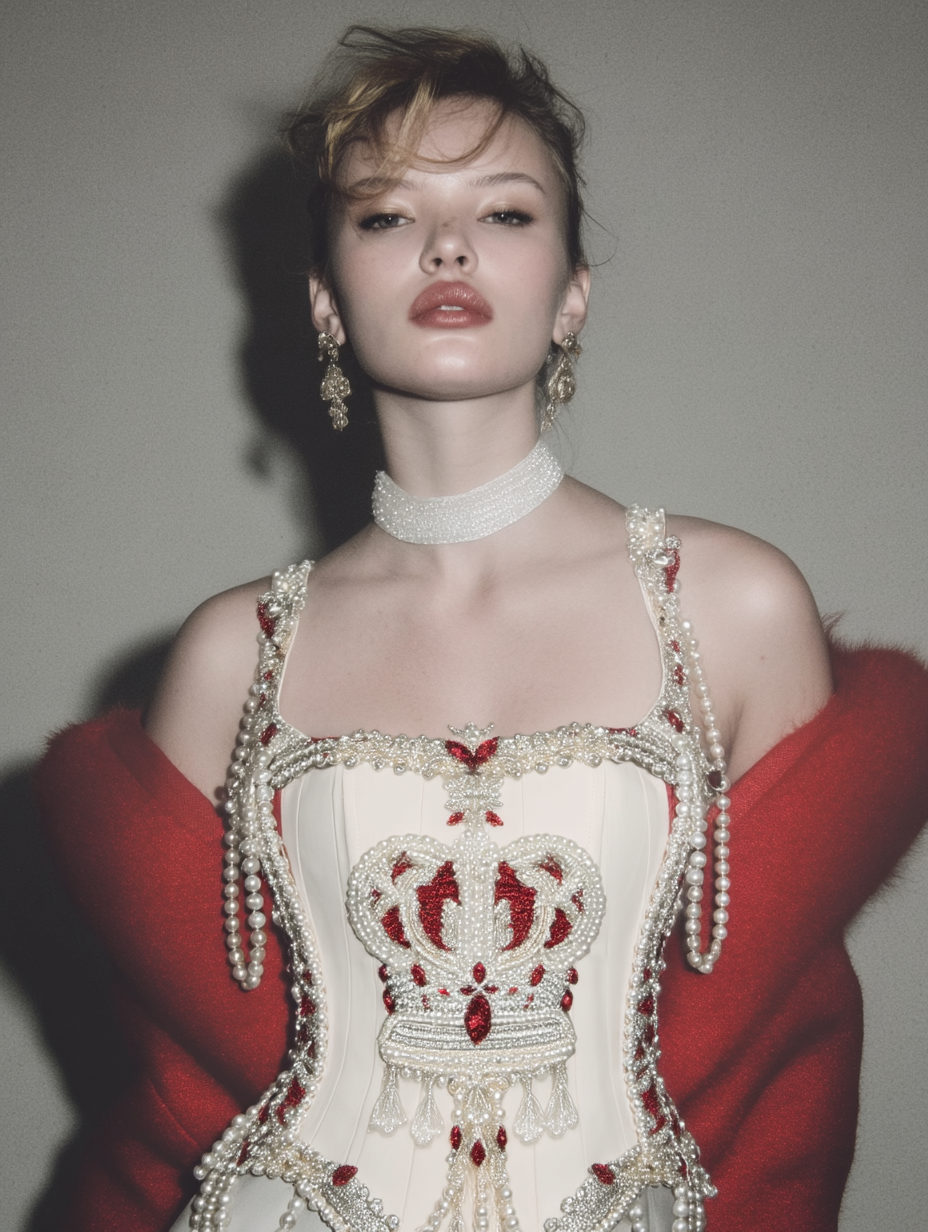
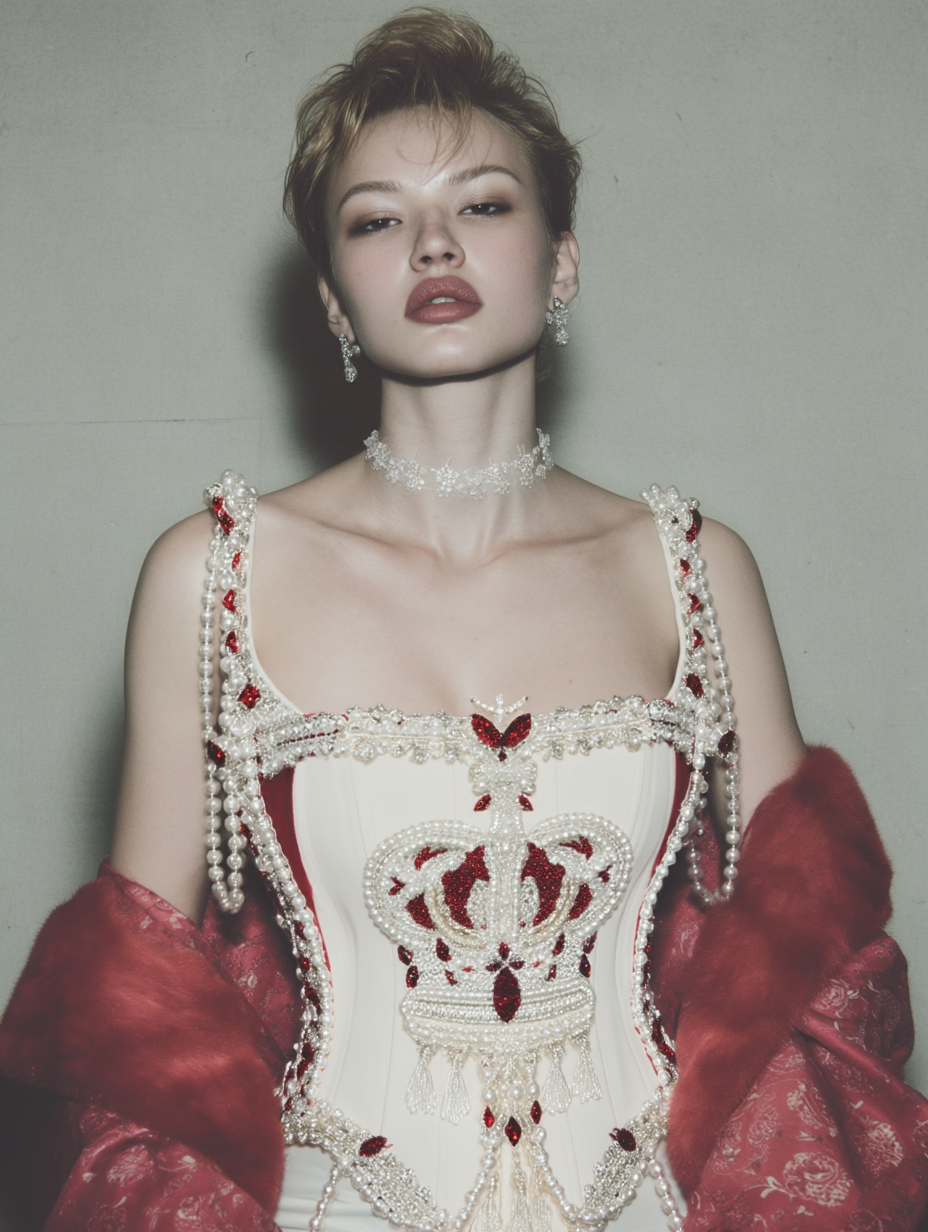
CORSET TRÔNE
THE ORIGIN
Constantinople. For seven hundred years the Byzantine emperors and empresses did not simply dress for ceremony — they were assembled into it. The central garment was the loros: a long band of silk so densely worked with pearls and gemstones that it lost all softness and became a shell, wound around the torso and fixed in place. It was too rigid to fold, too heavy to wear unaided and it belonged to no one. It was kept in the palace treasury and issued for the day. Macedonians, Komnenoi, Palaiologoi — different families, different centuries, the same encrusted casing closing around a new body each time. Constantine VII wrote down the rules for it himself in the tenth century. Theodora stands wearing one in Ravenna.
The dynasty was the garment. The person inside was temporary.
THE MOTIF
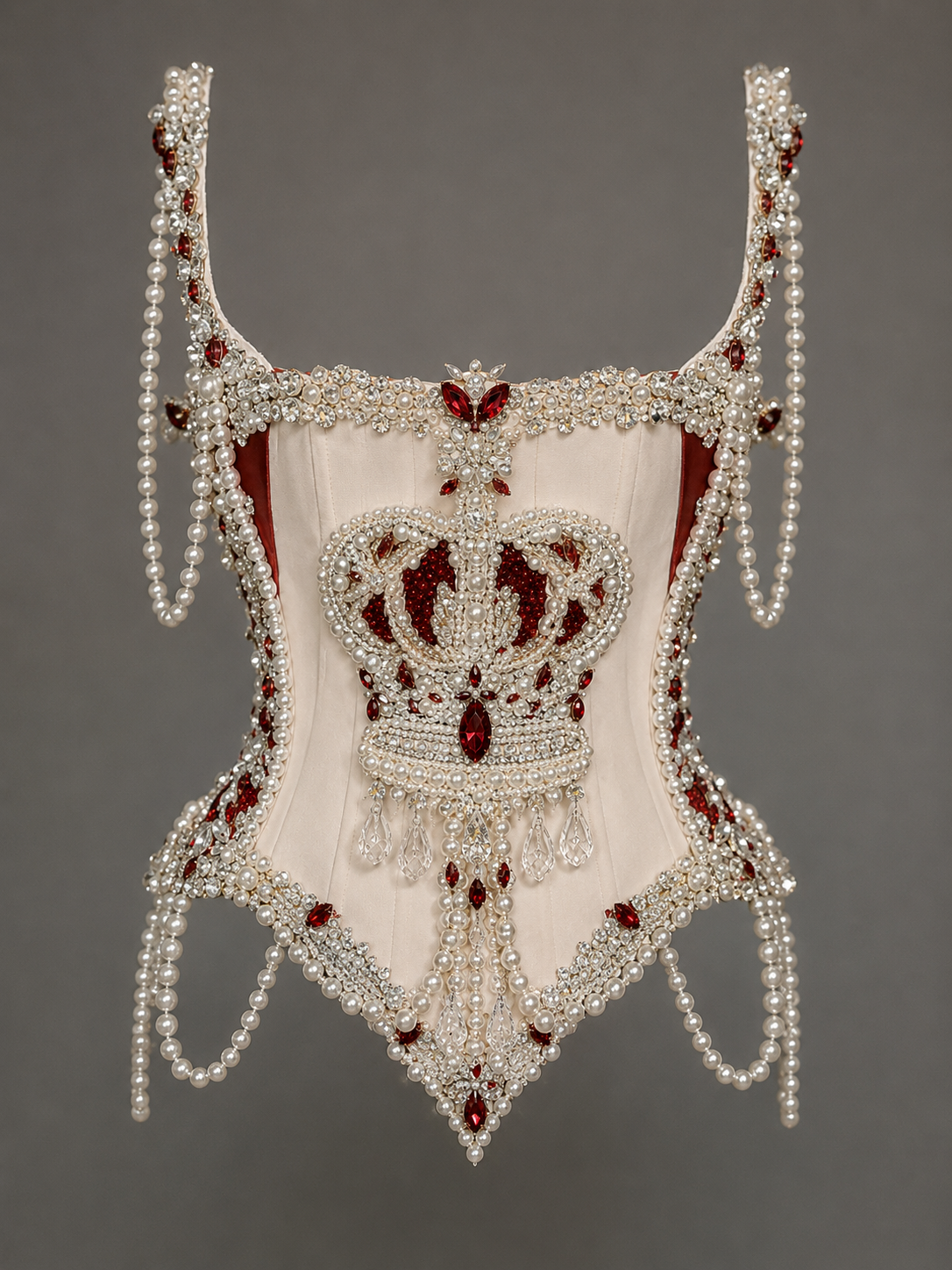
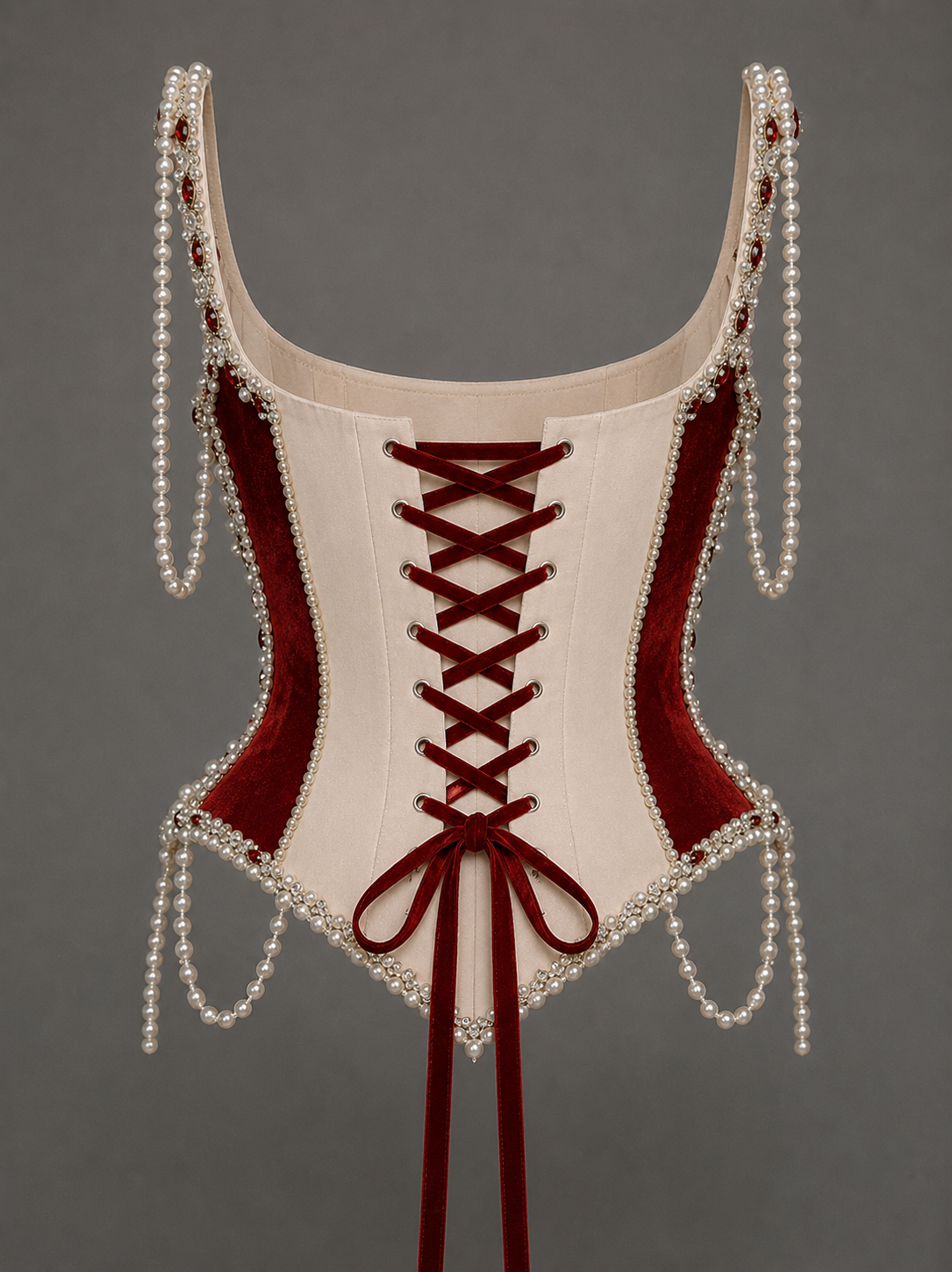
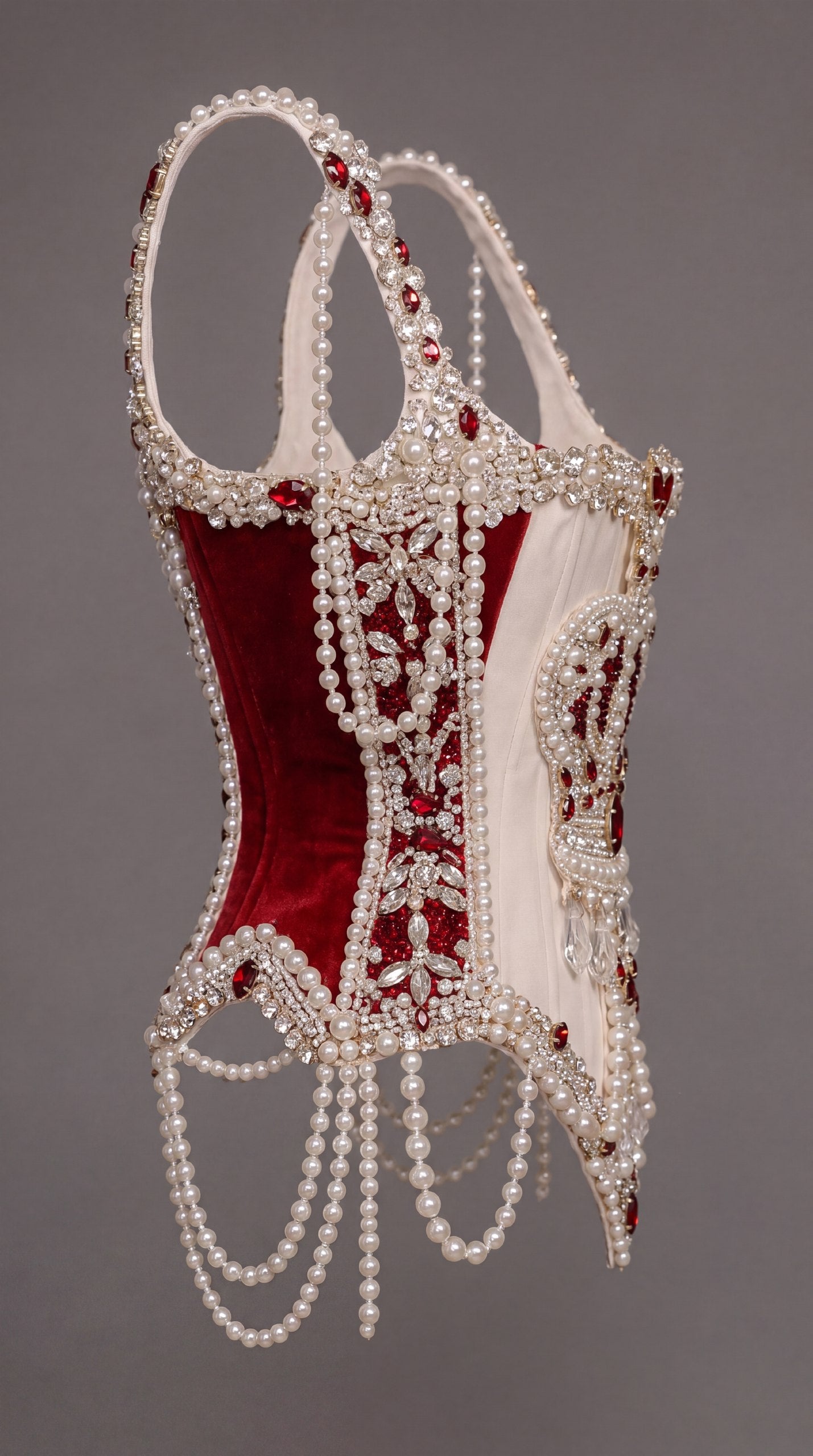
Pearl worked to the point of rigidity. Red beneath ivory — the reserved colour, permitted to one house at a time. Crown at the centre field.
The imperial loros, Constantinople — 9th–15th century.
How to Measure
Bust
Wrap the tape around the fullest part of your chest, keeping it level across your back and parallel to the floor. The tape should be snug but not compressing—you should be able to slide two fingers underneath.
Natural Waist
Find the narrowest point of your torso—usually 2–3 cm above your navel. Bend gently to one side: the crease that forms is your natural waist. Wrap the tape around this point.
Hips
Stand with your feet together. Wrap the tape around the fullest part of your hips and seat—typically 18–23 cm below your natural waist. Keep the tape parallel to the floor.
Fabric & Care
Shipping & Returns
Choose options